
The Apprentice Interviews the Master: Part 1
Creativity, Incense, and Scentscapes with Be-en-Foret

I first heard of Bonnie Kerr—also known by her Quebecois nome de plume, Be-en-Foret—during Alyssa Severeid’s excellent Incense Explorer podcast episode, “Exploring the Fragrant Forest with Bonnie Kerr.” In this wide-ranging interview, Be let loose a wild stream of self taught knowledge about perfume and incense. Her incense business, Esprit de la Nature, features joss sticks and unique non-combustible blends made out of beautiful imported botanicals as well as many fragrant plants she wild-gathers and grows herself. She makes what she terms “bioregional incense,” or incense that captures the scent of a specific place in nature.
When I mustered up the funds to buy directly from Be, I found that her website wouldn’t even let me input my address. Turns out a Canadian postal strike was the reason, which made shipping to Hawai’i even more untenable. I reached out to her via email, and she agreed to work out not only an incense trade, but a way to get her incense to me without breaking the bank.
Thus began a fun and rewarding correspondence as we became incense pen pals. Years ago, Be lived in Maui, and she wanted to create an incense fit for an ali’i (chief). I mailed her some dried maile and lauhala (plus a few samples of my humble creations), and she sent me samples of her incense and invaluable advice. After a year of sharing online, I was eager to meet her face-to-face. Be, ever gracious with her time and know-how, agreed to an interview via Teams this past February. The following is our talk, edited and condensed for clarity.
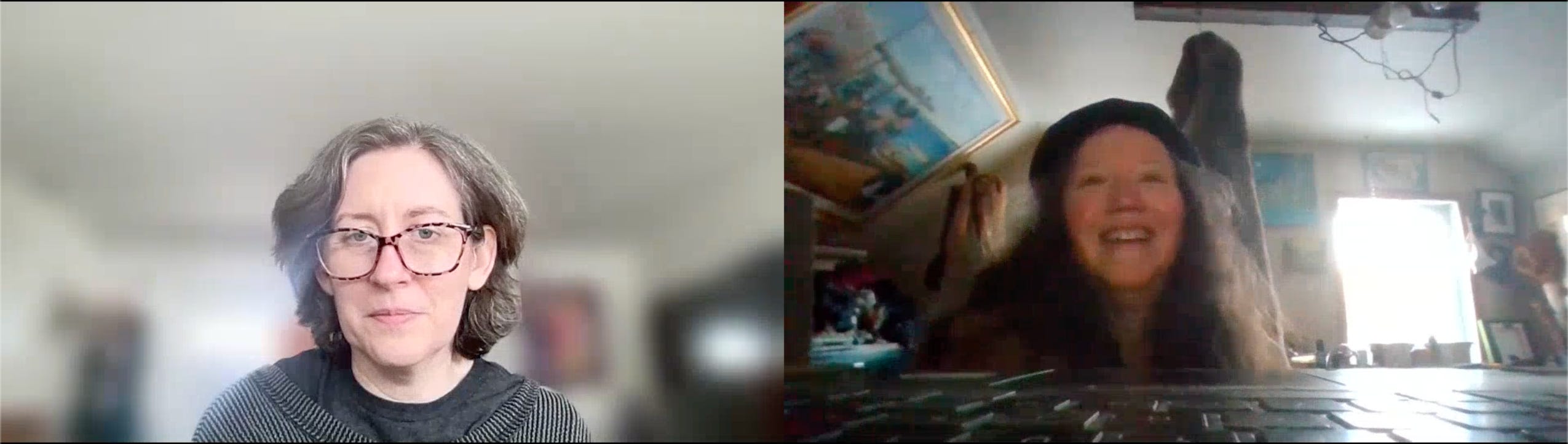
Sara Gray: Wow. Cool place you got there. What’s the painting you have on your right?
Be: That one was done by an artist when I had a gallery on a small island in the Caribbean a long time ago. It was one of the artists that I represented. When I closed the gallery, I bought the painting from her.
Sara Gray: What’s it like where you are? I’m sure you’re completely snowed in.
Be: It’s very snowy. I just came back from walking my dog in one of the abandoned mines nearby. It’s an incredible ecological destruction, but it’s so vast. It looks like you’re in the Alps when it’s all snow covered. There’s animals that go through there. We look at the tracks while I’m on snowshoes.
Sara Gray: It’s the opposite here. I’m in Burbank at my sister’s house right now. I decided to go study with Persephenie again. We’re going to finish making some incense paper on Friday.
Be: Are you using potassium nitrate on the incense paper?
Sara Gray: Yep.
Be: I was hoping that there was a way to do it without potassium nitrate, but that’s OK.
Sara Gray: I’m also going to dip my toe into perfumery again while I figure out a perfume accord on Friday morning. I’m always intimidated by that.
Be: It’s really good to. I started incense and perfumery pretty much at the same time, and it’s really, really good to know both. It’s very helpful.
Sara Gray: What’s one of your biggest incense fails?
Be: You know, I had to think about that. And one of the biggest ones was definitely the first time I made sticks. I’d made kitchen kinds of incense, with all the spices and stuff like that, which is pretty easy. Then I’d stopped doing that and just concentrated on warmed incense for years. And then I thought, oh, maybe I’ll try to get back into sticks and see how it goes. I used a formula that I would have used for a pastille, containing all conifers and local plants and stuff, and it was just terrible. I mean, it was UGH. I lit it and I put it out. Quickly. It smelled like an acid burning. Terrible smoke.
Sara Gray: Oh wow, that bad!
Be: That bad. You had written on Substack about your experience with the Douglas fir. North American conifers just don’t translate into combustible incense. That has been the the biggest challenge for me: relearning my entire palette of ingredients when the fire element comes into it. You just have no idea until you burn it.
Sara Gray: All the rules for pastilles or nerikoh just don’t apply to burnable incense. You have to learn two different sets of rules.
Be: That’s why I think perfumery will come pretty easily to you, because perfumery is more like heated incense. In my personal opinion, heated incense is better than perfumery because it’s more complex. You get so much more of a really deep, rich, complex fragrance than you do with perfume because perfume is extractions, and there’s always something left behind that’s not extractable in the solvents or in the still. Putting something on a warmer is like you’re there with the plant. It’s not just a part of the plant.
Sara Gray: I totally agree. Maybe it’s just the culture of perfume that intimidates me. There’s this online frag-head obsession with perfume, and so when it comes to making it, I feel like I still don’t know the names of the colors yet, and here I am trying to paint a whole painting.
Be: It takes some time and a lot of experimentation.
Sara Gray: Would you say that at this point most of your experiments work out pretty well?
Be: I would say that all my heated incense is consistent because of my closeness with the plants. I’ve lived off grid in a lot of places. I’ve worked with plants in all of those places, and I have a really good idea of what plants smell like when they’re alive. Heated incense really translates that well, so I don’t make too many mistakes with the heated incense. With combustible, it’s a whole other story. I do a lot of testing because you just don’t know when you put the flame to it what’s going to happen. I work a lot on trying to slow down the burn so that it will diffuse before it combusts. That’s part of my process now, and l’m still exploring what smells good. I have a list of about 60 mushrooms that I’ve gathered in the forest and, during the winter, I test them to see what they smell like on the heater. And then I also powder and burn them. There are some that smell great on the heater, there are some that have a terrible burn. Yet there’s some that smell good both ways, and the only way to find out is to actually do it.
Sara Gray: Is this a daily practice where you go and have an assortment of material that you practice warming or burning? Do you have a systematic way that you do that, or is it based on how you feel that day?
Be: I’m doing something everyday. I have an enormous amount of experiments going on. There’s never a dull moment. Like now: I can’t work on the counter in my workspace because I’ve been washing resins. I’ve put some resins in water and some in wine and then let let them sit for a while. Now I’ve drained the liquids off and they’re drying out down there on big dishes. I have to wait, and then I’ll scrape them off and see how they smell. I have a bunch of frankincense resins I did in water, and I have two myrrh resins, opoponax and kua, both in water and in wine because the Greeks or the Egyptians say myrrh is always better in wine. They used to drink it. I wanted to see if dissolving off the gum part using wine instead of water makes it better. Hopefully I’ll know tomorrow.
Sara Gray: I would love to hear the result of that. I’ve had success with soaking frankincense and dissolving the water soluble gum particles out. The leftovers burn so much better, they lose that burnt-caramel aroma.
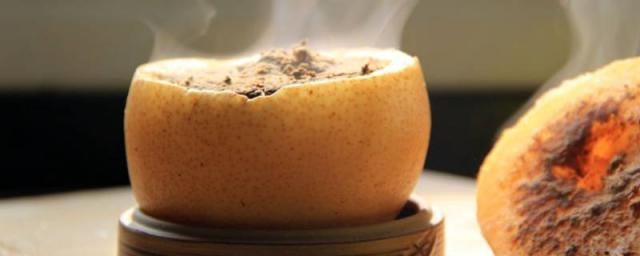
Be: Oh, I can tell you about my other incense epic fail. I knew that I was taking a chance with this. I have these two small Asian osmanthus trees that I overwinter in the house. They’re really small, but they flower a lot during the winter. I also had some really nice Mysore sandalwood. I would pick the fresh osmanthus flowers off and put them in the sandalwood. I did that all winter. At the end, it smelled really great, a really good combination of Mysore sandalwood with osmanthus. I wanted to see if I could bind it by steaming the pair in a goose pear/ quince. I knew I was taking a chance. I put it all in the pear, and I put a drop of muskrat musk around it, thinking that could stabilize it. And then I did the steaming. Unfortunately, all of the osmanthus aroma steamed off. There went my whole winter! But I had to know. If you don’t try, you don’t know. So this winter I’m doing it again, and this time I will not steam it in the pear at the end.
Sara Gray: A friend and I went in on buying some ambergris together because she wants to try and make some ambergris chocolate. I have no idea what I’m going to do with mine. It’s still sitting in my fridge. It’s a very small bit, like a gram. Do you have any advice?
Be: You could just tincture your gram. You should look on Dan’s site, Apothecary’s Garden. He has the percentages there. I think it’s 3% ambergris to 97% grain alcohol. There might be someone on your island that makes sugar cane alcohol.
Sara Gray: Actually, yeah, there’s a company that makes rum agricole out of the sugar cane, but I don’t know if the alcohol percentage is high enough.
Be: You want at least 90 proof. You know how it is…you ask around and find someone! It’s really easy to make. I make it even. That’s what I use for my alcohol.
Sara Gray: Do you have a still?
Be: Mm-hmm. I love distilling. It’s really nice, but I don’t do it for essential oils. I have two stills. I have one for making the alcohol, which is like more of a lab equipment piece. It’s pretty sophisticated. The other still I have is a tiny little copper alembic that I really love using to distill hydrosoIs. I like using hydrosols in some of my incenses, like for bakhoor or stuff like that. My alembic is only like 3 liters, so I will never get essential oils out of it except with resins. What I usually do is redistill the hydrosols at least three times so they gets super condensed.
Sara Gray: What kind of hydrosols do you usually make?
Be: I like rose and sweetgrass. I grow sweetgrass. I have an enormous amount of sweetgrass, and I also have a 70 foot long hedge of roses. You need fresh plant material for hydrosols.
Sara Gray: Speaking of delicious coumarin-filled things, have you tried burning or experimenting with the maile I sent you?
Be: I heated it and I really liked it. I’m waiting for a particular extract [author’s note: my transcription and recording didn’t capture the name of this extract, I will add later when Be clarifies], and then I’ll start making the Hawai’i incense that I’ve been thinking about for years that you kindly put the final touch to.
Sara Gray: Oh boy, I can’t wait to smell it! How did you deal with the hinano, did you find it a challenging material to work with? It’s so fibrous. How do you plan to use it? Are you going to cut it up or do you plan on powdering it?
Be: I’ll probably powder it. I used to make things with it when I lived in Hawai’i. I understand what you’re saying about the fibers. It’s very similar, but more delicate than the lauhala leaves. It’s really really sturdy stuff.
Sara Gray: What was the incense that made you get into making it?
Be: Well, it wasn’t so much the incense that made me want to get into it. I had been making plant medicine and using plants in other ways when I lived in Hawai’i. As you know, there’s not really much of a history of incense in Hawai’i. I mean, the Hawaiians had sandalwood, but they didn’t really burn it. It was more for making things. I worked with a lot of aromatic flowers. Every day I made a lei po’o for myself to wear. I was also cooking with the the plants from my gardens and from the local plants and making medicine with them. And then I moved to Quebec. I didn’t speak French at all, and I live in a very French area. But I still wanted to continue to work with plants. But I couldn’t make plant medicines, because I couldn’t really consult. As an herbalist, you really need to listen to people, and you need to understand things that are not said. You have to read between the lines sometimes to find out what’s going on with someone. And so that’s when the plants more or less told me to make incense.
I started to make a little bit of incense with resin I wild-gathered. There was a Yahoo group for incense, so I posted in there about the things I had, and maybe someone could give me some help? And Caitlyn from Mermade Magickal Arts wrote me. She said, “It sounds like you’re harvesting sustainably and with respect. I will pay you more than market rate for things if you harvest for me.” And I thought, wow, that’s really great, what an opportunity! I moved out to Quebec, I didn’t know what I was gonna do, and here’s this woman just coming into my life who is interested in helping me sustain myself.
So one season, I harvested a lot of stuff from the forest and sent it to her, and she was super happy with it. She said, “I want you to do the same thing for me next year, and if you want to make incense, I’ll sell it for you.” So I started to make incense. I was spending so much time alone in the forest. My husband was going out to go to school. I was literally for years in the forest by myself, in a place where I don’t speak the language, just wandering through the forest, looking. I really think that all of my first blends were channeled. It’s the only way I can explain it. The first blend that I ever made is still my best seller: Shamans of the Forest. And it’s just all local plants.
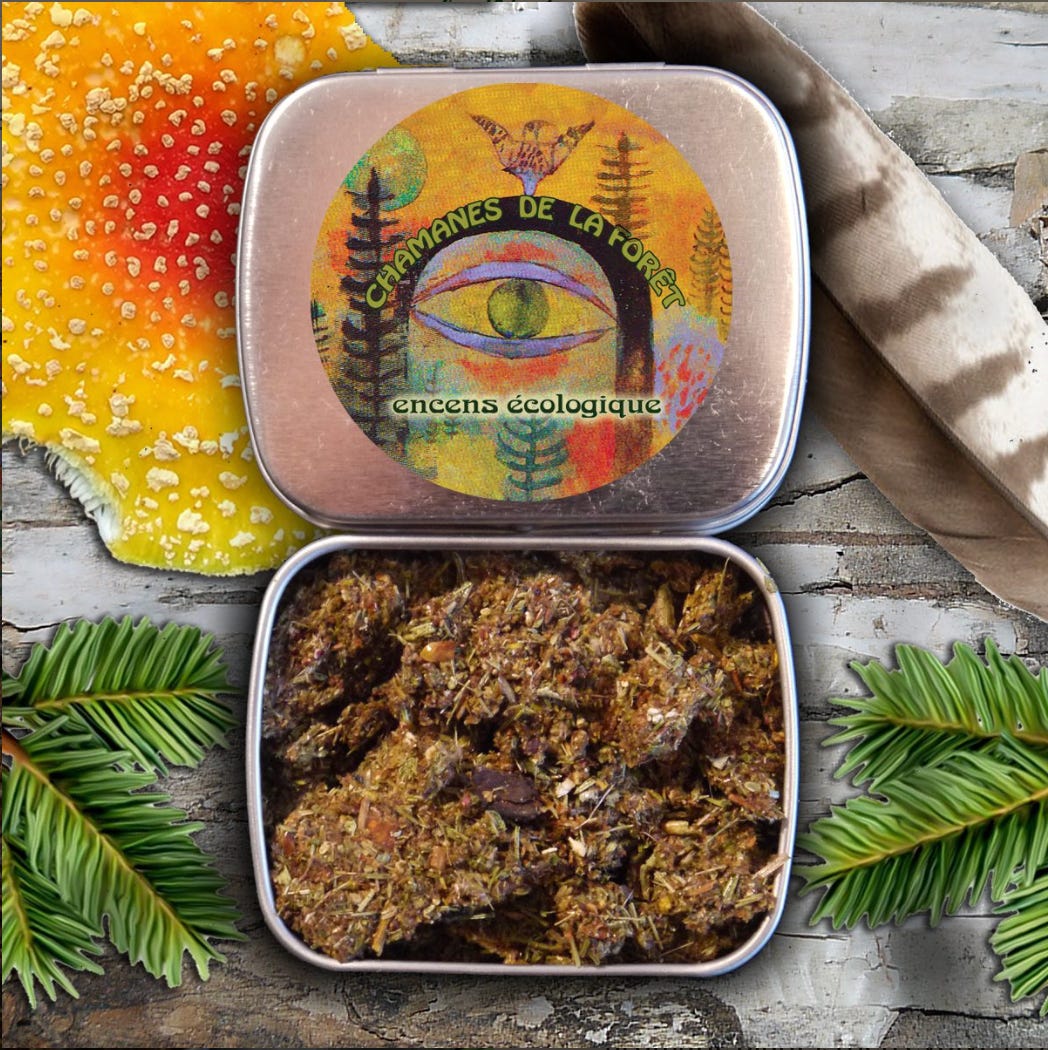
Sara Gray: That’s what I love the most about your incense. It so perfectly captures what I imagined to be the amazing forest where you live. That’s something that really inspires me. I really want to be able to capture a place in my incense as well.
I was curious too about how you hooked up with Mermade Magical Arts. They’ve been around for a while, right?
Be: Like 40 years. She has all of the clients to sell really fine incense to. She will take whatever I make.
Sara Gray: I love the articles you’ve written for them. I wanted to thank you in person because you have been so generous with your knowledge, both on that website and in the other places you’ve been online. Your sharing has been extremely valuable.
Be: My pleasure. That’s how Caitlyn was with me.
Sara Gray: I’m excited to do another enfleurage. I started doing a sandalwood and a frankincense enfleurage with plumeria last year, but I got out of the habit of changing out the flowers. I only did it for like maybe two or three weeks because I got sick and distracted. I don’t know if it really took. It still smells great, but then sandalwood and frankincense are going to smell great no matter what. I don’t have the sensitivity to really tell if the flower absorbed at all.
Be: Plumeria/ frangipani are one of the few flowers that you can dry and they still have a personality. I have used them in heated incense.
Sara Gray: We have quite a lot of those. We also have a lot of macadamia nut trees on our property, and they have the most gorgeous smell.
Be: No one’s doing that. Why not try it?
Sara Gray: That’s part of what excites me about your incense. It’s not just the same old like myrrh, frankincense, and sandalwood. I love all of those things and they’re important, but there’s so much out there. Why is it always the same plants that people focus on? Because they’re easy to buy, I guess.
Be: And they’re good.
Sara Gray: I love them all, but I know there’s more out there.
Be: It gives your incense that little touch that you know comes from you.
Sara Gray: Do you speak French now?
Be: Yes. I’m not super fluent, but I speak French now.
Sara Gray: How did you end up in Quebec?
Be: I met my husband in the Caribbean and we lived there for 7 years. Then the politics changed on the island, and he couldn’t get a business permit there, so he had no way to work. That’s why we moved to Hawai’i. We stayed there for another seven years. At the time, the Hawai’i state government was talking about closing down all of the small vacation rentals that didn’t have permits, and we were doing an ecotourism business with overnight stays. And so it was like…
Sara Gray: So much for that.
Stay tuned for Part 2, coming out next week.